 JimvsSHadmin
Choosing a supplement for a dog often starts with a simple question: what does the product actually contain? Pet stores and online retailers now carry many hemp-derived products, including oils, capsules, powders, and chewable supplements. The differences between these products can be significant, particularly in CBD concentration, additional ingredients, laboratory testing, and intended use.
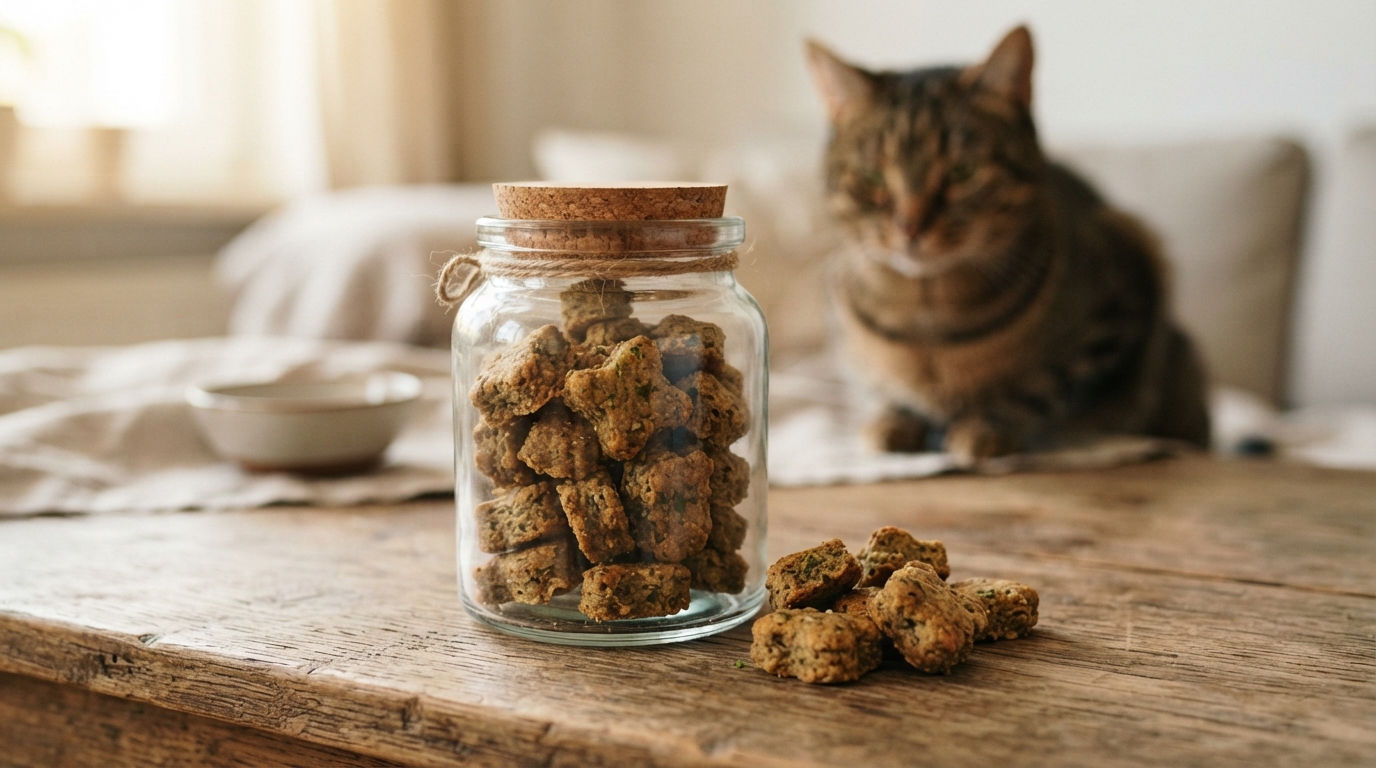
Holistapet CBD Dog Treats are chewable products formulated with cannabidiol, a compound found in cannabis and hemp plants. They are often designed to make administration easier than measuring liquid products. Before adding any cannabinoid supplement to a dog’s routine, however, it helps to understand current research, product labeling, potential risks, and the role of veterinary guidance.
What CBD Means for Dogs
CBD, short for cannabidiol, is a cannabinoid that does not produce the intoxicating effects associated with tetrahydrocannabinol, or THC. Hemp and cannabis plants can contain both compounds, although their concentrations vary by plant variety and manufacturing process.
Dogs have an endocannabinoid system, which includes receptors and signaling pathways involved in normal biological processes. Researchers have investigated whether cannabinoids interact with this system in ways that could influence pain, inflammation, seizure activity, appetite, and other functions.
The available evidence is still developing. Studies involving dogs are considerably smaller than the body of research involving humans, and results from one condition should not automatically be applied to another.
A 2019 study published in Frontiers in Veterinary Science evaluated cannabidiol in dogs with osteoarthritis. Researchers reported improvements in certain measures associated with pain and activity. The study was relatively small, so it provides useful evidence for further investigation rather than proof that CBD treats every dog with arthritis.
Research has also examined CBD pharmacokinetics, which describes how a substance is absorbed, distributed, metabolized, and eliminated by the body. These studies help researchers understand why the amount given, frequency of administration, and formulation can influence exposure.
CBD Is Not the Same as THC
The distinction between CBD and THC deserves careful attention.
THC is responsible for the intoxicating effects associated with marijuana. Dogs can be particularly sensitive to THC, and exposure may produce neurological and gastrointestinal symptoms. Depending on the amount consumed, signs can include excessive sleepiness, poor coordination, urinary accidents, vomiting, tremors, changes in heart rate, or unusual behavior.
A product labeled as “hemp� does not automatically mean that it contains no THC. Hemp-derived products may contain small amounts of THC, depending on the source material and manufacturing process.
A reliable label should therefore identify cannabinoid content clearly. If the amount of THC cannot be determined, the product deserves additional caution.
Reading a CBD Treat Label
The front of a package may emphasize flavor, ingredients, or the total amount of hemp extract. The information needed to evaluate the product is usually found elsewhere on the label.
A useful starting point is the amount of CBD in a single treat. For example, a package containing 30 treats and 600 milligrams of CBD in total would contain 20 milligrams per treat if the CBD were distributed evenly. That calculation matters because the total amount on the package does not tell a pet owner how much is supplied by one serving.
Other details deserve attention as well:
- Total CBD content
- CBD amount per treat
- THC information
- Complete ingredient list
- Serving or feeding directions
- Lot or batch number
- Manufacturer information
- Expiration or best-by date
- Storage instructions
- Independent laboratory testing
A certificate of analysis, commonly called a COA, can provide another layer of information. Depending on the laboratory, a COA may show cannabinoid concentrations and testing for contaminants such as pesticides, heavy metals, residual solvents, or microbial contamination.
A COA should correspond to the actual product or batch whenever possible. A generic laboratory report from an unrelated batch provides less useful information.
Watch the Other Ingredients
CBD is only one component of a treat.
Some products contain oils, flavoring agents, sweeteners, herbs, vitamins, or other supplements. The full ingredient list should be reviewed, particularly when a dog has food sensitivities.
Certain human foods are dangerous to dogs. Xylitol, for example, can cause severe hypoglycemia and potentially life-threatening complications in dogs. Products intended specifically for dogs should be checked carefully for ingredients that may be unsafe if the treat is shared or accidentally substituted with a human product.
A simple ingredient list can make evaluation easier.
What Research Has Found So Far
Interest in canine CBD has grown partly because early studies have investigated several potential applications. Osteoarthritis has received particular attention because chronic joint pain is common in aging dogs.
In controlled research, scientists have examined changes in activity, pain assessments, blood chemistry, and other measurements after CBD administration. These studies help establish whether a product has measurable effects and whether adverse reactions occur.
The evidence does not support treating CBD as a universal solution for canine health problems. Results from small studies need to be confirmed through larger and longer investigations.
The U.S. Food and Drug Administration has stated that it has not approved cannabis for use in animals and has not approved animal food products containing added CBD. This means that consumers should distinguish between a product being commercially available and a product having an approved veterinary medical indication.
The American Veterinary Medical Association has also emphasized the need for additional research into cannabis-derived products for animals.
Why Dosage Questions Are Complicated
There is no single CBD amount that can be described as appropriate for every dog.
Research studies use particular formulations and controlled conditions. Commercial treats can differ in concentration, ingredients, absorption, and consistency. A dose that has been studied for one formulation cannot automatically be transferred to another product.
Dog size matters, but it is not the only consideration. Age, liver function, medical history, medications, and the reason for considering CBD can all affect the decision.
Veterinary advice becomes especially important when a dog already receives medication. CBD may influence enzymes involved in drug metabolism, creating potential interactions with certain medicines.
For that reason, changing the amount frequently or combining multiple cannabinoid products without professional guidance can make the dog’s exposure difficult to assess.
Introducing a New Treat Carefully
Any new treat can cause digestive upset, regardless of whether it contains CBD.
A cautious approach involves introducing one new product at a time. If several supplements or treats are introduced simultaneously, it becomes harder to determine which product caused an unwanted reaction.
The dog’s behavior should also be observed after receiving a new supplement. Changes such as unusual sleepiness, weakness, vomiting, diarrhea, loss of coordination, or altered behavior warrant attention.
A feeding routine can help identify patterns. Recording the product, amount given, time administered, and noticeable changes creates useful information for a veterinary discussion.
A Simple Observation Record
A basic record can include:
| Information | Example |
|---|---|
| Product | CBD chew |
| Amount given | Follow veterinarian’s direction |
| Time | 8:00 a.m. |
| Food given | Regular breakfast |
| Behavior afterward | Normal activity |
| Digestive changes | None |
| Other medication | Listed separately |
This type of record is especially useful when a dog takes multiple products.
It also prevents assumptions based on a single observation. Dogs naturally have changes in appetite, energy, sleep, and activity throughout the day, so a pattern over several days can provide more useful information than one isolated response.
Product Quality Requires More Than Packaging
CBD products can look similar while containing different amounts of active compounds. Packaging alone cannot establish potency or purity.
Independent testing is one of the more practical ways to evaluate a product. Laboratory results can help verify whether the stated cannabinoid concentration is reasonably consistent with the contents.
Testing should also address contaminants. Hemp plants can absorb substances from the environment, and contamination can occur during cultivation or manufacturing. Proper testing helps identify problems that cannot be detected by looking at the finished treat.
A product with a transparent label and accessible laboratory documentation provides more information for evaluation than one that gives only broad claims about hemp.
Avoid Unsupported Medical Claims
Statements claiming that CBD can cure cancer, replace veterinary medicine, eliminate anxiety, or treat every type of pain go beyond what current evidence can establish.
The research landscape is more specific. Some studies have investigated osteoarthritis, seizure-related conditions, pharmacokinetics, and safety parameters. Other proposed uses require additional research.
A responsible approach separates documented findings from marketing claims.
Storage and Accidental Exposure
CBD treats should be stored securely, just like other supplements or medications.
Dogs can be persistent when they smell food. A container left on a countertop, inside an open bag, or near an accessible cabinet may become an opportunity for accidental ingestion.
Children should also be prevented from confusing pet supplements with ordinary snacks or medications.
If a dog consumes a large amount of a cannabinoid product accidentally, the packaging should be kept available. A veterinarian can use the product name, cannabinoid concentration, estimated amount consumed, and the dog’s weight to assess the situation.
THC-containing products require particular caution because intoxication and poisoning can occur in dogs.
Questions Worth Asking Before Buying
Before purchasing a cannabinoid treat, several practical questions can narrow the options:
- How much CBD is present in one treat?
- Is the amount of THC disclosed?
- Does the product have independent laboratory testing?
- Does the laboratory report match the current batch?
- Are all ingredients listed?
- Does the dog have an existing medical condition?
- Is the dog taking prescription medication?
- Has a veterinarian reviewed the product?
- Can the treats be stored securely?
- Are the product’s claims consistent with available scientific evidence?
These questions focus attention on information that can actually be checked.
Final Thoughts
CBD treats for dogs remain an evolving area of veterinary research, with promising findings in some areas but important gaps in knowledge. Careful product evaluation, accurate labeling, appropriate storage, and veterinary guidance can help pet owners make more informed decisions.